

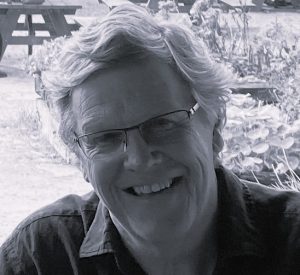
John Macdonald is a Melbourne-based architect with a Bachelor of Architecture from the University of Melbourne. He has extensive experience in ecologically sustainable design and has contributed to the development of numerous award-winning green buildings. In recognition of his leadership in this field, John received the Australian Institute of Architects’ Leadership in Sustainability Prize in 2014.
He has published widely, served on awards juries and presented at conferences across Australia, advocating for innovative approaches to sustainable architecture.
Over the past decade, John has turned his focus toward Carbon Dioxide Removal and Climate Cooling technologies. He holds multiple patents in these areas and has presented his research at leading international conferences. John is also an active member of several climate intervention think tanks and Google groups, including Rebrighten, NOAC, and HPAC.
He is currently a Director at Jam Plan Pty Ltd in Melbourne and supports the Climate Foundation in business development initiatives.
What sparked the idea for the work you are exhibiting at SWELL this year?
The spark came from watching the ocean closely. I saw how breaking waves scatter bubbles across the surface, reflecting light and cooling the water beneath. Later I learned that even the tiniest marine organisms breathe out gases that rise into the sky and help seed clouds. It struck me that the ocean was already shading itself in subtle, beautiful ways. I asked myself: could we amplify these natural whispers? As an architect, I am always drawn to pure, iconic forms, and the sphere — simple, timeless, complete — seemed inevitable. It became not just a functional idea, but a symbolic one: an eye of the Earth, watching, reflecting, and reminding us of what we might lose and what we might protect.
What’s something people might not realise about the process behind your work?
Environment is not a backdrop — it is part of the sculpture itself. At Currumbin, Bright Buoy will hold the shifting sky, the sweep of the horizon, and the movement of people who approach it, like an ever-changing reflection in a lens. The work becomes inseparable from its setting: a dialogue between object and place. And beyond this beach, the work is a reminder that our oceans themselves are fragile sculptures of nature — resilient yet vulnerable — shaping and shaped by the climate we live within.
What role does location or environment play in your sculptures?
Environment is not a backdrop — it is part of the sculpture itself. At Currumbin, Bright Buoy will hold the shifting sky, the sweep of the horizon, and the movement of people who approach it, like an ever-changing reflection in a lens. The work becomes inseparable from its setting: a dialogue between object and place. And beyond this beach, the work is a reminder that our oceans themselves are fragile sculptures of nature — resilient yet vulnerable — shaping and shaped by the climate we live within.
Is there a moment or memory that shaped you as an artist?
One of the strongest memories I carry is of snorkelling on the Great Barrier Reef, surrounded by its vibrant, living colour. Later, seeing images of the same reef bleached white by heat stress was heartbreaking. That contrast between abundance and loss impressed on me that art cannot only be about beauty — it must also speak to fragility and the urgency to act. Bright Buoy is born out of that duality: it is both a celebration of what is precious and a reminder of what is at risk.
What keeps you coming back to sculpture as a form of expression?
Sculpture has a presence that cannot be ignored. You encounter it with your whole body — you walk around it, you see yourself reflected in it, you feel its scale beside you. That physicality matters, because climate change is not an abstract concept; it is lived, embodied, and all around us. Sculpture allows me to turn that urgency into something visible and tangible. With Bright Buoy, the pure sphere becomes more than an object — it is an iconic form, both informing and reminding us of beauty and survival.
If you could install your work anywhere in the world, where would it be and why?
For me, the most fitting place for Bright Buoy as a pure sculpture is right here on the beach at Currumbin — where sea, sky, and people come together in its reflection. That is its poetic home. But as a working artwork, I imagine a constellation of Bright Buoys along the Great Barrier Reef — luminous guardians offering shade and precious time for corals to recover. Beyond the reef, I see them protecting reservoirs in drought-stricken regions, where they could save water while also bringing beauty to landscapes under stress. Wherever they are placed, the principle is the same: art and environment in dialogue, beauty united with care.